January 13, 2026
• 5 Mins Read
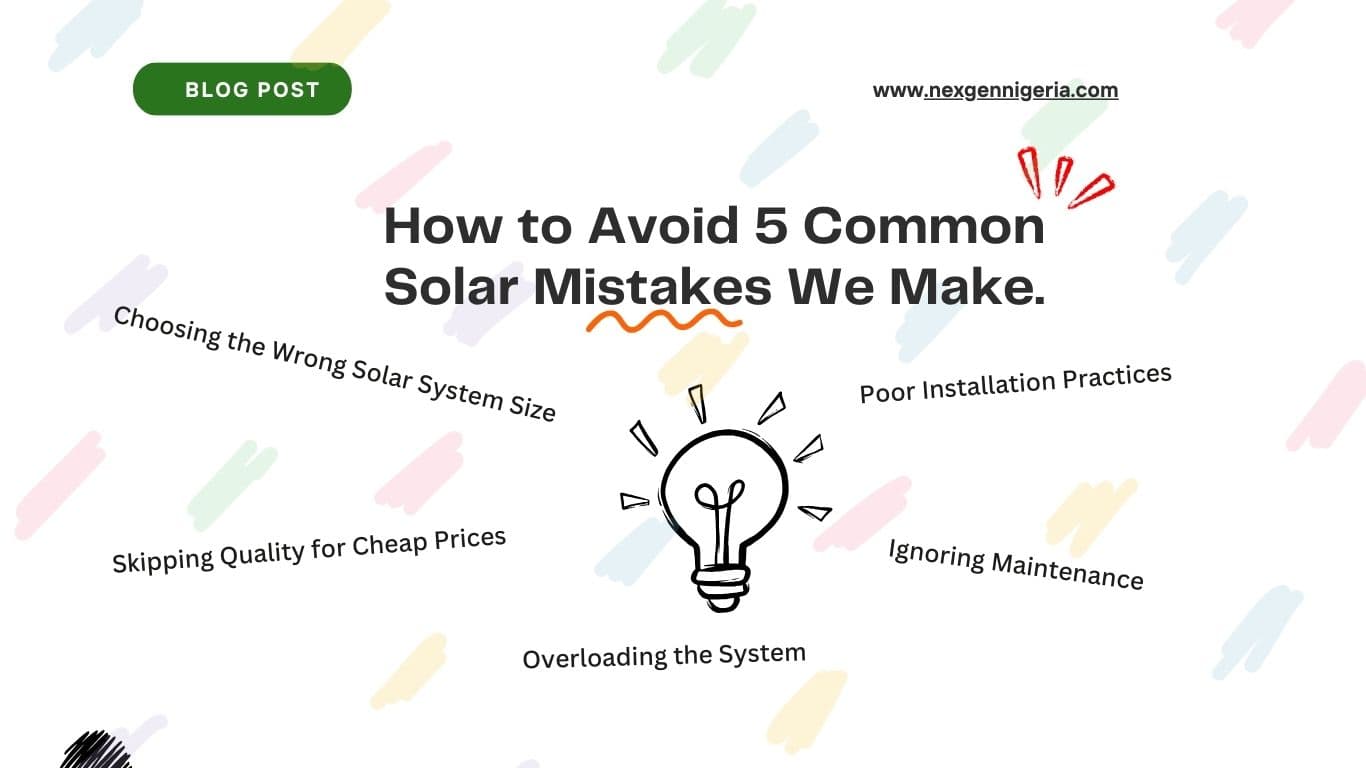
Solar energy has become one of the most reliable and cost-effective power solutions for homes and businesses, especially in regions with frequent power outages. A properly designed solar system can provide stable electricity for many years, reduce energy costs, and eliminate dependence on fuel-powered generators. However, many solar users unknowingly make mistakes that reduce system efficiency, increase maintenance costs, and shorten the lifespan of their investment.
Understanding these common solar system mistakes—and how to avoid them—can help you get the best performance from your system and ensure long-term reliability.
One of the most common mistakes solar users make is installing a system that is too small for their actual energy needs. This often happens when users try to cut costs by choosing cheaper or smaller components without proper energy assessment.
An undersized solar system struggles to meet daily power demand. This leads to frequent inverter overloads, rapid battery discharge, and poor overall performance. Over time, the constant strain damages batteries and inverters, resulting in early failure.
Before installing a solar system, calculate your total daily energy consumption. Consider all appliances, their wattage, and how many hours they are used. A properly sized system ensures smooth operation, longer equipment lifespan, and better user satisfaction.
Many solar users assume that once they have solar power, they can run all appliances at the same time. This is a dangerous assumption. Every inverter has a maximum load capacity, and exceeding it can cause overheating, shutdowns, or permanent damage.
Common appliances that overload inverters include air conditioners, electric irons, water heaters, and pumping machines. Running multiple high-power devices simultaneously puts excessive stress on the inverter and batteries.
Understand your inverter’s capacity and manage appliance usage wisely. Prioritize essential appliances and avoid running heavy loads together unless your system is designed to handle them. If your energy needs grow, consider upgrading your system instead of overloading it.
Batteries are one of the most important and expensive components of a solar system. Unfortunately, they are also the most commonly abused. Frequent deep discharging, improper charging, and poor installation conditions can significantly reduce battery lifespan.
Allowing batteries to drain completely on a regular basis damages internal cells and reduces storage capacity. High temperatures also accelerate battery degradation, especially in hot environments.
How to avoid it:
Install batteries in a cool, well-ventilated area away from direct sunlight. Avoid deep discharging whenever possible, and ensure your system is properly configured to maintain safe charge levels. Regular monitoring helps detect issues early.
Solar panels depend entirely on sunlight to generate power. Poor panel placement, incorrect orientation, or shading from trees and buildings can drastically reduce energy production.
Even partial shading on one panel can affect the performance of the entire array, leading to lower output and slower battery charging.
How to avoid it:
Ensure solar panels are installed at the correct angle and direction to receive maximum sunlight throughout the day. Regularly check for new sources of shading, such as growing trees or newly constructed buildings, and address them promptly.
Many users believe solar systems are completely maintenance-free. While solar systems require less maintenance than generators, they still need periodic inspection and care.
Dust, dirt, and debris on solar panels reduce sunlight absorption. Loose cables, corroded terminals, or damaged mounts can also affect performance if left unchecked.
How to avoid it:
Clean solar panels regularly using water and a soft cloth. Schedule routine inspections to check wiring, battery connections, and inverter performance. Preventive maintenance helps identify small issues before they turn into costly repairs.
The market is flooded with counterfeit and substandard solar products. These components may look attractive due to their low prices, but they often fail prematurely and perform poorly.
Low-quality panels produce less power, fake batteries degrade quickly, and poor inverters may lack proper safety features. In the long run, these products cost more due to frequent replacements and repairs.
How to avoid it:
Always purchase solar components from trusted suppliers. Genuine, high-quality products offer better efficiency, longer warranties, and improved safety. Investing in quality from the start saves money and stress over time.
Even the best solar components can fail if installed incorrectly. Poor wiring, weak mounting structures, and improper system configuration can lead to power loss, safety hazards, and equipment damage.
Incorrect cable sizing, loose connections, or improper grounding increase the risk of system failure and electrical accidents.
How to avoid it:
Work with qualified solar technicians who understand proper installation standards. A professional installation ensures safety, efficiency, and long-term system reliability.
Many users design solar systems based only on their current energy usage, without considering future expansion. Over time, additional appliances such as air conditioners, freezers, or office equipment increase energy demand.
A system that once worked well may become insufficient, leading to overload and reduced performance.
How to avoid it:
When designing a solar system, consider possible future upgrades. Planning ahead allows for easy system expansion and prevents unnecessary strain on existing components.
Leaving appliances on when not in use increases power consumption and puts extra load on batteries and inverters. Inefficient energy usage reduces system efficiency and shortens equipment lifespan.
How to avoid it:
Adopt smart energy habits. Turn off appliances when not in use and prioritize energy-efficient devices. Efficient energy usage improves system performance and reduces wear on components.
A solar system is a valuable long-term investment, but its performance and lifespan depend largely on how it is used and maintained. Avoiding common mistakes such as undersizing, overloading, poor battery management, and neglecting maintenance can make a significant difference in system reliability.
By planning properly, using quality components, and practicing responsible energy usage, you can enjoy uninterrupted power and long-term savings.
At FlySolarStore, we are committed to helping users make informed decisions by providing quality solar products, expert guidance, and reliable solutions. With the right approach, your solar system can serve you efficiently for many years to come.